Rhinoplasty
Conveniently located to serve the areas of Beverly Hills, CA

You want a Nose Job that will Keep Them Guessing™
If you’re thinking of getting rhinoplasty in Beverly Hills, you’re in the right place. Celebrity plastic surgeon Dr. Ashkan Ghavami has helped countless celebrities get the nose they’ve always dreamed of.
Before and After Photos


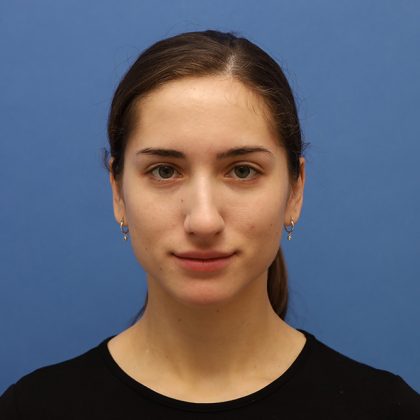
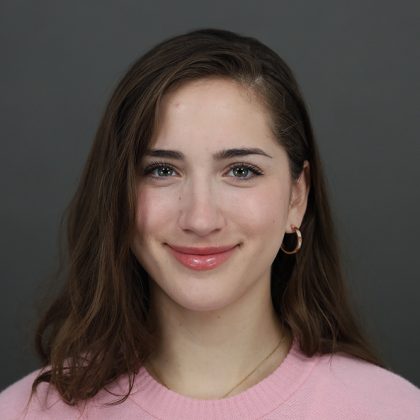
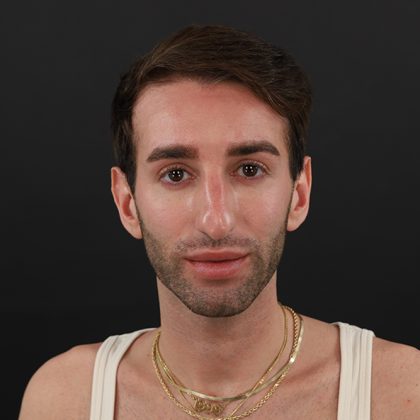
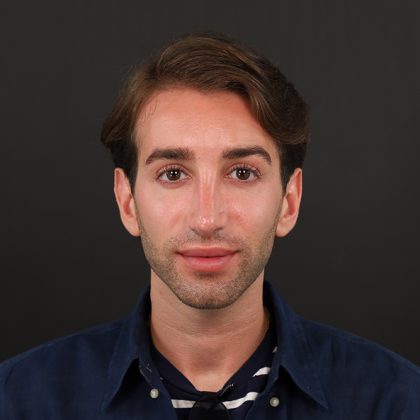
Your nose plays an important role in the overall attractiveness and “personality” or character of your face. Also, it usually reflects your ethnic heritage, linking you to your family’s roots and ancestry. However, few people are born with a perfectly shaped nose that is optimally balanced with the rest of their facial features. And, if you are very unhappy with the way your nose fits on your face, a lack of confidence can permeate throughout your entire life. You might feel withdrawn, anxious or even depressed because of your nose. This is not uncommon. Rhinoplasty is perhaps one of the most challenging and most sensitive surgeries we perform. In fact, it may be the most exacting and personally satisfying procedure that exists in all of plastic surgery.
You can gain confidence and have natural customized results to where some of your family may not even notice at first. They will know you look great but not know why! This is the hallmark of a well-executed natural approach to nasal shaping. Rhinoplasty is designed to enhance your nose’s shape and size, improving your entire facial appearance. It is often a life-changing operation, giving patients greater self-confidence and an overall better quality of life. It does not need to alter your beautiful ethnic heritage and does not need to look awkward or “done.” We are part of a new era where true rhinoplasty experts like Dr. Ghavami are setting the way to effectively help you in your “nose-journey.”
Over the course of his career, rhinoplasty specialist Dr. Ghavami has become one of the most respected rhinoplasty surgeons in Southern California and has been recognized worldwide. He began his professional career training with leading rhinoplasty surgeons at the University of Texas Southwestern Medical Center at Dallas, which some consider to be the “capital” of rhinoplasty experts because of the annual Dallas Rhinoplasty Symposium, currently in its third decade. Dr. Ghavami has been a regular member of this conference’s teaching faculty for nearly a decade. He is also an executive board member of the exclusive Rhinoplasty Society, which has less than 100 active members worldwide.
Dr. Ghavami has dedicated his career from as early as medical school to this very challenging subspecialty in plastic surgery. Rhinoplasty is considered by most surgeons to be the most complex of all cosmetic plastic surgeries. Mastering it demands a lot of experience, time, continued advancement and changes in technique.
Contents
- 1 Before and After Photos
- 2 Overview
- 3 Benefits
- 4 Cosmetic Reasons
- 5 Medical Reasons
- 6 Procedure Steps
- 7 Why Dr. Ghavami
- 8 Dr. Ghavami’s Philosphy
- 9 Types of Rhinoplasty
- 10 Ideal Candidates
- 11 Surgery Details
- 12 Recovery
- 13 Finding A Great Rhinoplasty Doctor
- 14 Case Studies
- 14.1 Patient Example 1: Dorsal Hump & Bulbous Nasal Tip
- 14.2 Patient Example 2: Tip Shaping, Elevation & Bridge Narrowing
- 14.3 Patient Example 3: Reshaping & Bridge Narrowing
- 14.4 Patient Example 4: Major Tip Modifications & Multiple Cartilage Grafts
- 14.5 Patient Example 5: Wide Nose with Thick Skin
- 14.6 Patient Example 6: Lengthening, Reshaping, & Nostril Narrowing
- 15 FAQ
- 15.1 How do I discuss with Dr. Ghavami the results I am looking for?
- 15.2 What are the risks of rhinoplasty?
- 15.3 Do I need revision rhinoplasty?
- 15.4 Who Are Good Candidates for Rhinoplasty?
- 15.5 What Is the Recovery Like After Rhinoplasty?
- 15.6 How Soon After Rhinoplasty Surgery Will I Be Able to Return to Work?
- 15.7 How Soon Can I Use My Contacts or Glasses?
- 15.8 How Long Until I See Results?
- 15.9 What Are the Risks of Rhinoplasty?
- 15.10 Will My Insurance Cover Rhinoplasty?
- 15.11 Can a Rhinoplasty Procedure Be Financed?
- 15.12 Do I Need Revision Rhinoplasty?
Overview
Rhinoplasty, or nose reshaping surgery, is performed to improve the appearance or the function of the nose. Colloquially referred to as a “nose job,” rhinoplasty may alter the tissue, cartilage and bone of the nose to improve its appearance or correct a functional problem
Benefits
- Improve the appearance of your nose
- Create gorgeous and natural-looking harmony and balance among the facial features
- Treat a birth defect, broken nose or result of trauma
- Correct problems that affect breathing function (e.g., deviated septum)
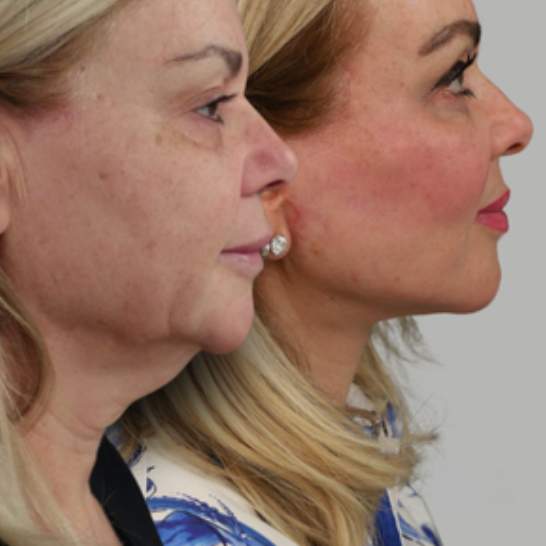
This side view with profile view shows how much improvement in facial harmony is created by a custom bridge and tip reshaping.
As you can imagine, rhinoplasty is a complex and challenging operation that should be left to the most qualified surgeons. Anytime the central feature of the face is modified, it will affect the rest of the face. Excellent technique and a detail-oriented approach is crucial to avoid under- or over-correction. This is a surgery of millimeters and fewer and fewer surgeons are even attempting to specialize in this surgery. Hundreds of cases should be performed per year by your surgeon to mark their experience with the various types of noses. All noses are so different from each other that it is mandatory to go to a surgeon who can deal with whatever walks through the door.
The key to achieving successful results is to select the right plastic surgeon. Individuals from all over the country (and beyond) seek Dr. Ashkan Ghavami’s rhinoplasty expertise. He is known for excellent technique and patient-centered care. Thousands of men and women have a more attractive nose and greater self-confidence, thanks to Dr. Ghavami. His techniques and concepts have been published in numerous textbooks and peer-reviewed articles. He is a highly sought out national and international speaker and lectures about his expert approaches and innovative thinking.
Cosmetic Reasons
The majority of rhinoplasty patients want to improve the appearance of their nose, either by removing a bump on the bridge, slimming down the bridge or refining the tip. Improving the appearance of the nose has a significant impact on the harmony and balance of the entire face. One of Dr. Ghavami’s talents is respecting the unique features of his patients to provide an approach unique to each individual patient. He does not produce “cookie-cutter” results; rather, he takes pride in customizing rhinoplasty to enhance the individual appearance of each patient. As you view our photo gallery, you will notice that every patient looks different; there are no overall similarities or “signatures.” Each nose stands out and is in balance with the individual’s other facial features. “The nose should always look like the patient was born with it. It is the center of the face,” states Dr. Ghavami.
The following are some of our patients’ most common nose cosmetic concerns:
- Crooked nose
- Wide bridge
- Hump or depressions on the bridge
- Large, bulbous, drooping or upturned tip
- Wide, thick or unevenly shaped nostrils
- Overall asymmetry
- Imbalance between the nose and other facial features (i.e., need for cheek or chin shaping
Medical Reasons
Dr. Ghavami also performs rhinoplasty to correct deformities internal to the nose – including congenital deformities and those resulting from trauma or injury – that impair breathing function. For example, someone might need reconstructive nose surgery after breaking his or her nose in a car accident or while playing a contact sport. Functional rhinoplasty can also help people who are born with cartilage and bony deviations that impair their breathing. Nasal breathing is vital to life and effective oxygen exchange in the body.
Regardless of whether a rhinoplasty is performed for cosmetic or medical reasons, Dr. Ghavami’s results look organically beautiful, like no surgery was ever performed.
Procedure Steps
Rhinoplasty may be performed using an open or closed approach. During an open rhinoplasty, Dr. Ghavami makes an incision across the columella, the small strip of skin that separates the nostrils. A closed rhinoplasty is performed through incisions made within the nostrils; some call this a scarless nose job. The advantage of an open rhinoplasty is better access to the underlying structure, with direct visualization and improved cartilage graft security. The advantage to a closed rhinoplasty is no chance of visible scarring on the columella. However, in modern rhinoplasty, many surgeons are learning the open approach, as many feel that the revision rates and accuracy are improved. Dr. Ghavami performs both open and closed rhinoplasty and will make recommendations during the consultation.
With open rhinoplasty, Dr. Ghavami lifts the skin from the tissue and cartilage frame to access the underlying tissue and cartilage. He then reshapes the nose, either reducing, augmenting or re-arranging the structure with cartilage from the septum or another area of the body (e.g., the rib or ear). Dr. Ghavami can also perform procedures such as turbinoplasty, turbinectomy, or septoplasty (to correct a deviated septum), or make other adjustments to restore normal breathing function.
Once he is happy with his work, Dr. Ghavami re-drapes the skin and tissue and closes the surgical incisions. Often, a cast or a nasal splint is placed to help the nose settle into its new structure. Dr. Ghavami does not leave the operating room unless he is 100 percent satisfied with the outcome.
Swelling and bruising is normal after surgery. Bruising will go away quickly, but it can take up to a year for the swelling (especially of the tip) to completely dissipate and the final results to reveal themselves. However, most patients are able to see their overall results starting to form about 4 to 6 weeks after surgery.
Please visit our BEFORE & AFTER PHOTO GALLERY to view our natural and beautiful results
Many more patient examples are also available to view in the office during your consultation.
Why Dr. Ghavami
Dr. Ghavami is a talented surgeon and a compassionate physician that has received acclaim from patients, fellow surgeons and the media. He is highly respected for his experience and rhinoplasty techniques. While Dr. Ghavami performs a range of plastic surgery procedures at his Beverly Hills practice, he has a special passion for rhinoplasty.
Dr. Ghavami learned from renowned rhinoplasty experts during his plastic surgery training at the University of Texas Southwestern Medical Center at Dallas. UTSW has a global reputation for training rhinoplasty surgeons; in fact, it has hosted the Annual Dallas Rhinoplasty Symposium for over 30 years. Dr. Ghavami has had the honor of serving as a member of the conference’s teaching faculty for nearly a decade, sharing what he has learned with other physicians both in the annual Dallas Conference as well as around the world.
Dr. Ghavami is also on the executive board of the exclusive Rhinoplasty Society, which is an elite organization dedicated to advancing the education, art and science of this highly coveted subspecialty in plastic surgery. He has served as faculty for the American Society for Aesthetic Plastic Surgery (ASAPS) and lectured around the world for the International Society of Aesthetic Plastic Surgery (ISAPS) and the Pan-Pacific Surgical Association (Hawaii Plastic Surgery Symposium), which he has co-chaired. He also currently serves as the Co-Chairman of the Rhinoplasty Symposium at the annual ASAPS meeting.
Dr. Ghavami is a widely published author of textbook chapters and articles on rhinoplasty. He has made numerous appearances on nationally broadcast television programs to discuss his advanced cosmetic surgery techniques.
Dr. Ghavami’s Philosphy
Dr. Ghavami honors the diversity and individuality of his patients. He designs surgical plans that take into account the unique needs and goals of every patient. The “cookie cutter” approach is never used and shortcuts are never taken. As you browse our rhinoplasty photo gallery, you will notice that it features noses that look very different from one another; this reflects the variety and uniqueness of each nose and the work that has been performed. Each person’s anatomy is completely different. The way the skin, bones, and cartilage interact creates a challenge like a unique musical composition. If these structures are dealt with properly, the results can come together like a beautiful symphony.
While a few patients will want a “designer nose job,” Dr. Ghavami believes that no one should be able to tell that his patients have had a nose job. He strives to create natural-looking results possible that fit each patient’s personality and unique goals. This requires the use of meticulous techniques that he has refined over the course of his many years in practice and which he has lectured on for nearly a decade.
Video: Natural Nose Job- by Rhinoplasty specialist Dr. Ghavami
As you explore our rhinoplasty photo gallery, we challenge you to cover up the “before” photo and look only at the “after” photo. If you look at the photos this way, you should not be able to tell that the person in the “after” photo has had any cosmetic work done.
Types of Rhinoplasty
Dr. Ghavami performs primary and revision (secondary) rhinoplasty. Demand for the latter procedure continues to grow as more patients have poorly performed primary rhinoplasty surgery (by inexperienced surgeons) that compromises the strength, shape, beauty and breathing function of the nose. Revision rhinoplasty or “secondary rhinoplasty” is, in many ways, similar to a reconstructive operation, especially if the nose has been depleted of the majority of its natural cartilage and support. In these cases, Dr. Ghavami can use grafts from the septum (or sometimes the ear and even rib cartilage) to carefully build up the nose. He can correct nasal collapse and breathing issues at the same time. Nearly half of Dr. Ghavami’s nose practice is revision work of noses that have been less than optimally operated on. Many come from around the world and utilize his concierge team to make their travels and time in Los Angeles most comfortable and easy.
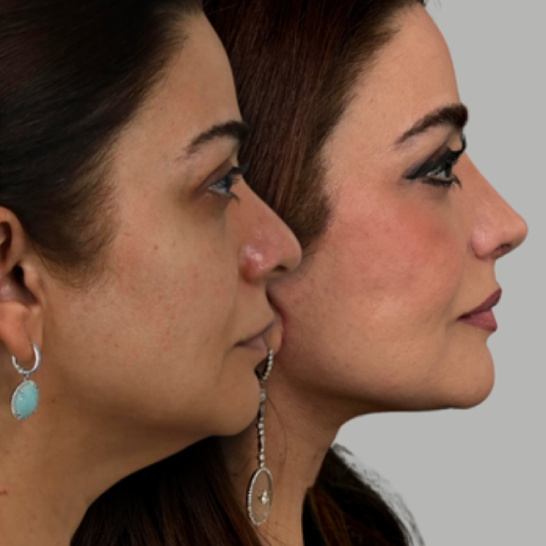
Complete custom tip reshaping in a very thin-skinned ethnic rhinoplasty patient.
“Ethnic rhinoplasty” — another specific area of interest to the doctor — includes Hispanic nose surgery, African American rhinoplasty, Middle Eastern rhinoplasty and Asian rhinoplasty. Dr. Ghavami is well versed in the physical nuances of each ethnicity and how they usually affect the shape and size of the nose. He knows how to enhance these qualities for a more beautiful and flattering nose. His goal is always to preserve his patient’s unique ethnic qualities while making improvements that can be dramatic and seamless and natural at the same time (he never wants to completely erase the physical characteristics of a patient’s ethnicity).
Ideal Candidates
Most people seeking rhinoplasty want to achieve one of the following:
- Bring the nose into balance with the rest of the face
- Correct a crooked nose
- Improve your smile (better selfies)
- Improve the profile of the nose, removing bumps or depressions
- Build up a flat wide nasal bridge
- Tweak a nasal tip that is oversized, drooping, upturned or bulbous
- Fix oversized, flaring, or asymmetrical nostrils
- Change the angle between the nose and the upper lip
Dr. Ghavami evaluates all potential candidates during a consultation at his practice. Suitable candidates are generally individuals who at least 15 years old and whose nose has stopped growing. Candidates should be in good physical and psychological health and not smoke. They should demonstrate that they are seeking rhinoplasty of their own volition (not to satisfy anyone else), and that they have reasonable goals and expectations of surgery.
Video: Teen Rhinoplasty Before and After-Live with Dr. Ghavami on The Ricki Lake Show
Every treatment plan is different, based on the needs and goals of the individual patient. Often, rhinoplasty involves removing or adding cartilage (with grafts) to reshape the nose. The features of the nose, such as the base, bridge, tip and nostrils, can also be tweaked as needed.
Rhinoplasty is generally performed on an outpatient basis. IV sedation or general anesthesia is used for the patient’s comfort. The operation usually lasts one to two hours. Revision cases can take longer.
Surgery Details
Dr. Ghavami uses one of two rhinoplasty techniques. Closed rhinoplasty is performed through incisions made within the nostrils. Open rhinoplasty requires an additional incision made across the strip of skin separating the nostrils (called the columella). Through the incisions, Dr. Ghavami gently separates and lifts the skin “envelope” from the underlying nasal tissue and structures for a detailed, three-dimensional view. We believe that open rhinoplasty is often required to truly deliver an exacting approach and to minimize revisions. Open rhinoplasty is like opening the hood of a complicated engine like that of a Lamborghini in order to fix it, while a “closed” (or what some unfortunately call “scar-less”) rhinoplasty is like trying to expertly fix that engine with the hood down and working through the grill using a flashlight.
Dr. Ghavami follows the pre-determined treatment plan, which may involve adding, removing or otherwise modifying the tissue, cartilage and bone to the desired shape. If he needs to, Dr. Ghavami can take cartilage from the septum, ear, or ribs and add it to the nose (this is common in revision or ethnic rhinoplasty cases). Dr. Ghavami can correct a deviated septum and enlarged turbinates or make other improvements to the nose’s structures to improve breathing function.
When he is finished, he re-drapes the skin over the nose and stitches the incisions closed.
Recovery
Patients may have different degrees of swelling, bruising, bleeding, stuffiness, nose ache and a dull headache for several days after surgery. These side effects are temporary and quickly subside. Most patients take about a week off from work or school. Contact lenses can be worn immediately after surgery, but glasses may need to be taped to the forehead or propped up on the cheeks for up to four weeks. Dr. Ghavami can demonstrate taping and massage techniques to improve results.
As the swelling subsides, the results of the operation become visible. Swelling may reappear from time to time during the first year after the procedure (generally more noticeable in the morning). This is why Dr. Ghavami encourages patients to wait a year before judging their final rhinoplasty results. However, most of the overall shape of the new nose can be seen and judged around the three-month mark.







Lastly, many of Dr. Ghavami’s expert textbook chapters and articles are shown in our Publications section. Dr. Ghavami has also been featured in national media to discuss his advanced cosmetic surgery techniques.
“The following contents were written by third parties for educational purposes. The offices of Dr. Ghavami were not involved in the writing or production of these contents.”
Deciding to undergo rhinoplasty is no small matter, which is why it’s important to choose a surgeon who is not only board certified by the American Board of Plastic Surgery or Board of Facial Plastic Surgery, but has extensive experience as well. In order to ensure results that are thoroughly satisfying, we recommend thoroughly researching your surgeon, checking credentials, asking questions, and critically look at “long-term” video and photographic results.
First of all, when you consult with the surgeon, find out the number of years they have been performing the procedure you seek. It may also be helpful to find out how many operations the surgeon has performed in total. Getting the feedback from the right source is critical when deciding on the rhinoplasty Beverly Hills surgeon because it will reduce the surgical risks and help you feel confident in the surgeon’s ability to produce the results you desire.
It is also important to talk to your surgeon about what to realistically expect from the procedure. Sometimes people are not satisfied with their results because they want a nose shape that doesn’t balance out the other facial features. A good cosmetic surgeon will have a strong sense of aesthetics and will be able to give you a nose that looks natural and beautiful. The cosmetic surgeon will also be able to advise you about the pros and cons of the surgery, the expected recovery time and the post-op care that needs to be taken.
Choosing the right doctor for your nose surgery will ensure you receive great post-op care, thereby giving you peace of mind as you recover from surgery.
Finding A Great Rhinoplasty Doctor
Cosmetic surgery is one of the most thriving industries today. With people becoming increasingly conscious about their looks, a large number of them are interested in enhancing their appearance via plastic surgery. Cosmetic nose surgery is among the most sought-after procedures in this category. If you are opting to have this procedure performed in the United States, there is no substitute for finding the right surgeon for nose surgery.
Though there are many surgeons practicing in the country, the ones located in Beverly Hills are generally most renowned for their high levels of skill and abilities. The following are a few points to keep in mind when you search for a surgeon who can provide the best results.
Choosing the right surgeon will require some research on your part, with regards to research and exploring your options. It is highly advisable to select a surgeon who has ample experience, a rich scholarly background and specializes in the plastic surgery procedure you seek. It is also recommended that you look at before and after photos of the surgeon’s previous patients. By doing your research, asking questions, and exploring your options, you will be able to find the perfect surgeon for your rhinoplasty.
Why Dr. Ashkan Ghavami
Dr. Ashkan Ghavami’s approach to nose surgery places a premium on symmetry and harmony. Nose jobs look “done” when the alterations don’t blend seamlessly with the rest of the patient’s facial structure. Likewise, even a technically proficient rhinoplasty can suffer from “racial incongruity” which means a surgeon tries to sculpt the nose of an Asian, African-American, Middle Eastern, or Hispanic patient into some idealized “Caucasian nose” that supposedly defines the universal “standard of beauty.” The result simply looks unnatural. That is why Dr. Ghavami believes it is so important to carefully preserve distinct ethnic features, even while enhancing the overall aesthetic of a patient’s nose and correcting any health-related issues (such as a congenital defect or damage sustained from an injury). An “ethno-sensitive” approach to both primary and revision rhinoplasty is necessary to create a tailor-made and unique appearance, in contrast to one-size-fits-all, cookie-cutter approaches that invariably fail.
You may be a good candidate for rhinoplasty if you are 15 years of age or older, have a fully developed facial structure, are in general good health, are a non-smoker, and have realistic expectations and aspirations when it comes to results. If you have any questions or concerns about this very safe procedure, schedule a consultation.
Case Studies
Patient Example 1: Dorsal Hump & Bulbous Nasal Tip

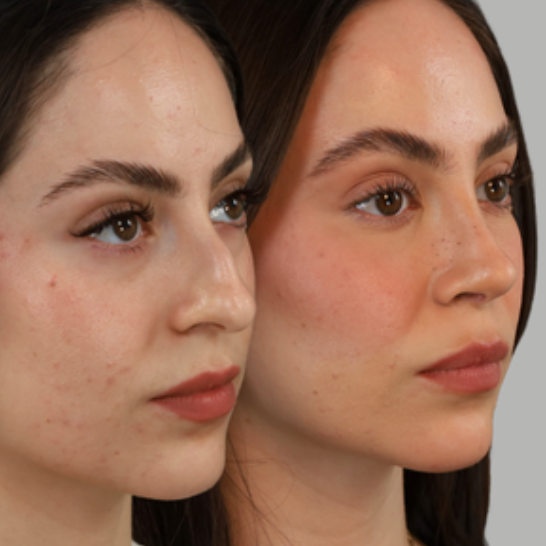
This patients bony and cartilage hump was trimmed down, her tip was shaped and the balance between her bridge and tip was smoothed out which brought out her other beautiful facial features. Notice how her eyes and lips look fuller.
Patient Example 2: Tip Shaping, Elevation & Bridge Narrowing

An example of a patient with attractive features who required major tip shaping and elevation as well as narrowing of her bridge and hump. Many websites do not show the front view of their patients. While many surgeons can remove a hump, the finesse involved in nose shaping can only be truly judged on front view.
Patient Example 3: Reshaping & Bridge Narrowing

An extreme makeover of a middle eastern nose with poor pre-op shape and no characteristic shadows, angles, or highlights.
Patient Example 4: Major Tip Modifications & Multiple Cartilage Grafts
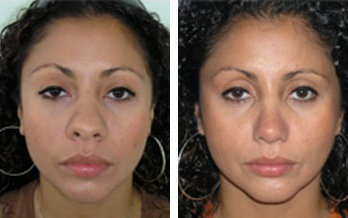
A very wide tip and large nostril base. This type of ethnic nose requires understanding of what “ethnicity” is and how a nose can be re-shaped without changing a person’s ethnic features. Major tip modification with multiple cartilage grafts was needed.
Patient Example 5: Wide Nose with Thick Skin
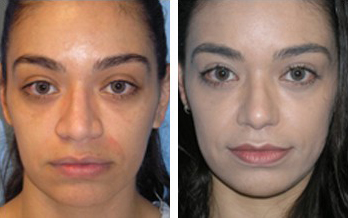
This patient is very different from the first example. She has thick skin, poor cartilage framework and wide nostrils. Her nasal bridge did not require hump removal like the previous example.
Patient Example 6: Lengthening, Reshaping, & Nostril Narrowing
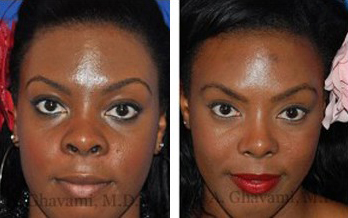
African american rhinoplasty in which the nose was lengthened and completely reshaped, along with nostril narrowing, lowering and reshaping. The tip was also refined, producing this dramatic, life-changing result.
As with most of Dr. Ghavami’s results, you can cover the pre-op view and only look at the post-op picture, and not know that this was a nose that had been surgically modified. “Natural” is central to our treatment philosophy.
FAQ
How do I discuss with Dr. Ghavami the results I am looking for?
It is very important to the doctor that he understands your vision for your desired nose. Together during consultation, the two of you will spend time discussing your ideal results. You will look at pictures of your current nose as well as pictures of nasal shapes you like, and decide how to improve it to best complement your facial balance. Dr. Ghavami will also work with you to make sure your nose matches your ethnic heritage. Final results depend on your nasal bone and cartilage structure, facial shape, skin thickness and age.
What are the risks of rhinoplasty?
When performed by an experienced surgeon, the risk of complications is very rare. Complications include infection, nosebleed or shifting of cartilage shape over time.
Do I need revision rhinoplasty?
If you are unhappy with a previous rhinoplasty operation, you may need revision (or secondary) rhinoplasty. You should wait at least a year for the results to stabilize before pursuing revision rhinoplasty. However, many candidates come earlier than that to get Dr. Ghavami’s expert opinion so they know what to anticipate. Not every rhinoplasty surgeon accepts revision cases, but Dr. Ghavami does and is skilled in dealing with all nasal types; he has truly “seen it all.” He has the skill and experience to correct the botched results for a more attractive nose (and better breathing function). Dr. Ghavami has seen noses operated on as many as six times. Do not lose hope. Dr. Ghavami will be very candid and open with you regarding what is realistically possible and he will NEVER badmouth another surgeon. If you go to a surgeon who is quick to speak badly about another, we recommend going elsewhere as signs of greed, jealousy and unprofessionalism like that are not good indicators. Keep in mind that some of the challenges of revision rhinoplasty are that there is usually less cartilage to work with, and there might be scarring or skin or tissue contraction. However, Dr. Ghavami can work around these obstacles to deliver beautiful and natural looking results.
Who Are Good Candidates for Rhinoplasty?
Dr. Ghavami describes what makes a good rhinoplasty candidate to those interested in this cosmetic procedure. A good candidate for rhinoplasty is someone who:
Is 15 years of age or older
Has fully developed facial structures
Is in generally good health
Is a non-smoker
Has realistic expectations
What Is the Recovery Like After Rhinoplasty?
Swelling and bruising is common, and patients may experience some discomfort such as a nose ache and a dull headache for several days after surgery. Some bleeding can also occur. These side effects are typically brief and quickly subside.
How Soon After Rhinoplasty Surgery Will I Be Able to Return to Work?
Patients are usually able to return to work about one week after the rhinoplasty procedure. Patients should, however, avoid very strenuous activities for two to three weeks.
How Soon Can I Use My Contacts or Glasses?
Contact lenses can be worn immediately after surgery. Eyeglasses should not be supported by the nose for at least four weeks. However, as odd as it sounds they can be taped to the forehead. Alternatively, a device called a “cheek rest” can be clipped to your glasses. Eyeglasses or sunglasses should not rest on the nose, as this applies pressure and weight that may affect the healing and function of the nose.
How Long Until I See Results?
As the swelling subsides, the results of the operation become visible. Swelling may reappear from time to time during the first year after the procedure (generally more noticeable in the morning). This is why Dr. Ghavami recommends patients wait a year before judging their final rhinoplasty results. However, most of the overall shape of the new nose can be seen and determined around the three-month mark.
What Are the Risks of Rhinoplasty?
When performed by an experienced surgeon, the risk of complications is very rare. Complications from rhinoplasty can include:
Poor wound healing or scarring
Infection
Skin discoloration and swelling
Nosebleed
Shifting of cartilage over time
Change in skin sensation (numbness or pain)
Will My Insurance Cover Rhinoplasty?
If you experience breathing difficulties due to your nose, your insurance company may cover the cost of your procedure. Insurance generally covers rhinoplasty performed for functional or reconstructive reasons, but not for cosmetic reasons. Contact us today to see if your surgery is covered under your PPO plan.
Can a Rhinoplasty Procedure Be Financed?
Dr. Ghavami provides patient cosmetic surgery financing through CareCredit and Alphaeon, which offer affordable monthly payments.
Do I Need Revision Rhinoplasty?
If you are unhappy with a previous rhinoplasty operation, you may need revision (or secondary) rhinoplasty. You should wait at least a year for the results to stabilize (until all swelling and healing has finished) before pursuing revision rhinoplasty. However, many candidates come earlier than that to get Dr. Ghavami’s expert opinion so they know what to anticipate.